
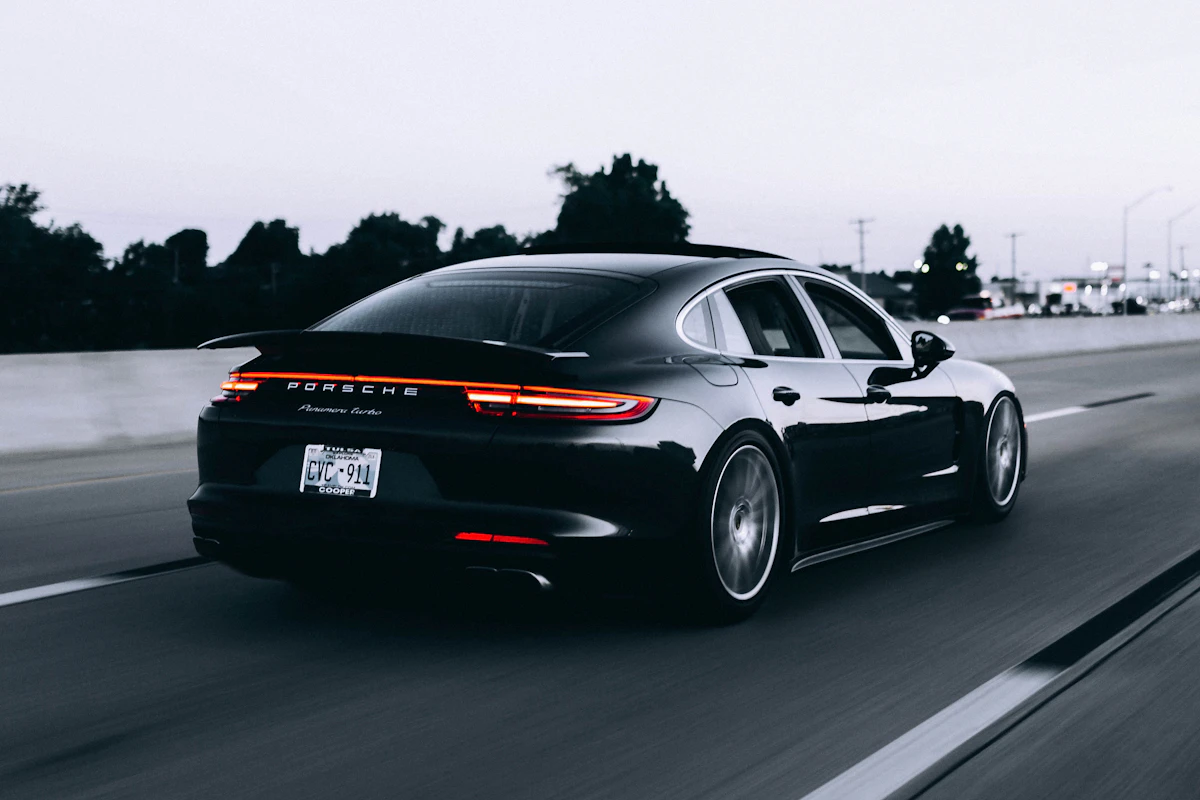
Does Vehicle Paint Color Alter Your Insurance Rate?
No. Vehicle paint color has exactly zero impact on your car insurance premium. Under standardized National Highway Traffic Safety Administration (NHTSA) rules, a vehicle’s 17-digit Vehicle Identification Number (VIN) encodes origin, manufacturer, series, engine displacement, body style, and model year—it contains zero characters representing exterior paint color. The enduring 40-year myth that "red cars cost more to insure" originated because high-horsepower sports coupes and convertibles are disproportionately purchased in red by younger, higher-risk drivers. The premium surcharge reflects the sports car's turbocharged engine and driver demographics, never the paint.
What an Underwriter's System Actually Pulls From Your VIN
When you enter your 17-digit VIN into an insurance quote engine, the underwriting API queries the Insurance Services Office (ISO) and Verisk databases. The system decodes the following structural elements:
| VIN Position | Encoded Vehicle Metric | Underwriting Rating Factor |
|---|---|---|
| Positions 1–3 (WMI) | World Manufacturer Identifier & Country | Foreign import parts availability vs domestic supply chain costs. |
| Positions 4–8 (VDS) | Body Style, Engine Displacement, Horsepower | Maps directly to ISO Loss Cost Symbols (1–75) for Collision and BI. |
| Position 9 | Check Digit (Mathematical Authenticity) | Fraud detection; validates against altered or gray-market titles. |
| Position 10 | Model Year | Depreciation curve baseline and Actual Cash Value (ACV) schedule. |
| Position 11 | Assembly Plant & Passive Restraints | Airbag count, rollover curtain deployment, and structural mass. |
The Trim Level Escalation: Civic LX vs. Civic Type R
While paint color is invisible to insurers, your vehicle's trim level and powertrain package drastically alter your monthly bill. A higher trim package frequently upgrades the vehicle from a commuter symbol to a high-performance casualty risk:
🚗 Base Commuter: Honda Civic LX
158-horsepower 2.0L naturally aspirated engine. Standard steel panels, conservative driving demographics, low collision frequency. Benchmark insurance rate: $1,640/year ($136/month).
🏎️ Performance Trim: Honda Civic Type R
315-horsepower turbocharged 2.0L engine. High-performance aluminum front fenders, front-mount intercooler vulnerability, aggressive track-focused driving profiles. Benchmark insurance rate: $2,480/year ($206/month)—a +51.2% surcharge for the exact same model name.
The ADAS Paradox: Why Top Trims Cost MORE to Insure
Consumers frequently assume that buying a top-tier luxury trim packed with the latest Advanced Driver Assistance Systems (ADAS)—such as adaptive cruise control, lane-centering cameras, and cross-traffic radar—will drastically lower their insurance premiums through safety discounts.
In reality, top trims with advanced sensors frequently cost $250 to $450/year MORE to insure on the physical damage side:
- In a base vehicle, a minor 10-mph parking-lot tap requires unbolting a plastic bumper cover, repainting it, and reinstalling it for $600 to $800.
- On a top-tier trim, that same bumper houses forward millimeter-wave radar modules, ultrasonic sonar pins, and active grille shutters. A minor tap crushes sensitive mounting brackets and requires optical sensor recalibration in a specialized bay, turning a $600 repair into a $3,400 to $4,500 collision claim.
Mass & Momentum: The 5,500-lb Full-Size SUV Liability Penalty
Vehicle curb weight creates a fascinating actuarial divergence between first-party medical costs and third-party liability charges:
Under Newtonian physics, when a 5,500-lb full-size SUV (such as a Chevy Tahoe or Ford Expedition) collides with a 2,800-lb compact sedan, the heavy SUV absorbs significantly less deceleration G-force. As a result, the SUV’s occupants suffer less physical trauma—lowering first-party Medical Payments (MedPay) or Personal Injury Protection (PIP) premiums.
However, the 5,500-lb SUV transfers massive kinetic energy into the opposing vehicle, demolishing passenger cabins and inflicting severe orthopedic injuries. Consequently, underwriters apply a 15% to 25% surcharge on Property Damage (PD) and Bodily Injury (BI) Liability to heavy trucks and large SUVs to cover the severe third-party damage they inflict.
Theft Loss Frequency: Why Kias and Hellcats Defy MSRP
Comprehensive insurance premiums are not governed by the sticker price of your vehicle—they are governed by the Highway Loss Data Institute (HLDI) theft loss frequency per 1,000 insured vehicle years:
The 5-Year Low-Cost Vehicle Blueprint
If you want the lowest possible car insurance bill for the next five years, target vehicles matching this exact profile:
- Vehicle Segment: Compact to midsize crossover SUV (Subaru Forester Base/Premium, Mazda CX-5 Select, or Honda CR-V LX).
- Powertrain: Naturally aspirated 2.0L to 2.5L 4-cylinder engine (avoid twin-turbos, performance hybrid packs, or supercharged V8s).
- Body Architecture: Standard steel unibody stampings with high availability of domestic aftermarket replacement parts (avoid single-piece aluminum gigacastings).
- Safety & Anti-Theft: Factory electronic engine immobilizer, IIHS Top Safety Pick+ rating, and standard unibody bumper design.